
Population Peaks: How Shrinking Population Could Affect Housing Markets

Rethinking the "More People, Limited Land" Paradigm
If you've ever heard someone say, "Buy land—they're not making any more of it," you've encountered real estate's favorite maxim. For over a century, housing market fundamentals have been driven by a seemingly ironclad principle: growing populations need more housing, but land is finite. This dynamic has supported long-term real estate appreciation and convinced countless people that property values must inevitably rise. Plot twist: population growth is slowing and we are in uncharted waters, so it might be time to revisit some of our most cherished housing assumptions.
Shifting Population Projections
The "endless growth" story is showing some serious plot holes:
- Many developed countries have already reached peak population or will soon—Japan's population has been shrinking since 2010, and they're not alone
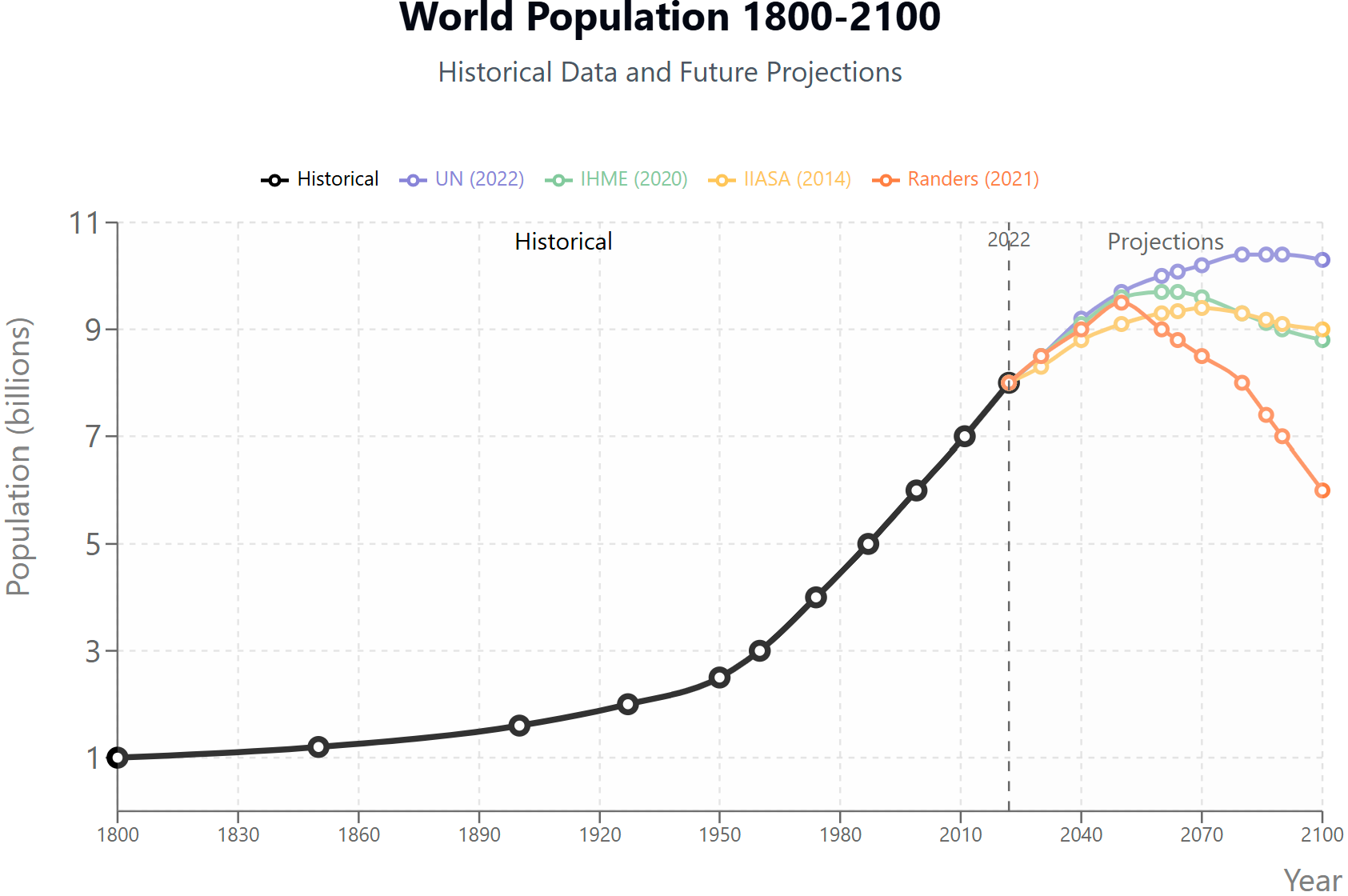
- Global population projected to peak within 30 to 50 years according to several models, rather than the endless upward climb previous generations assumed
- Birth rates have fallen below replacement levels in most developed nations (turns out Netflix, job stress, and rising housing costs are pretty effective birth control)
- Population aging is dramatically changing housing needs and preferences (less demand for 4-bedroom suburban homes, more interest in accessible single-level living)
Potential Impacts on Housing Markets
When the demographic tide shifts, the housing market will feel it:
- Decreased demand in some markets could affect property values—imagine suburbs with more houses than buyers (it's already happening in parts of Japan and rural America)
- Smaller households mean different housing needs—the average US household size has dropped from 3.3 people in 1960 to about 2.5 today
- Regional variations will become more pronounced, with population shifts toward climate-resilient and economically vibrant areas
- Potential oversupply in areas experiencing population decline, creating buyer's markets where they haven't existed in generations
Long-term Implications for the Buy vs. Rent Decision
These shifts could fundamentally alter the housing equation:
- The traditional assumption of ever-increasing property values might need reconsideration—what if your home value stays flat or even declines over decades?
- Housing as a long-term investment might show different patterns than past generations experienced (your grandparents' accidental real estate fortune may not be repeatable)
- Regional market knowledge becomes even more important—national trends will matter less than local demographic realities
- Flexibility may become more valuable in uncertain demographic environments, potentially shifting the buy vs. rent calculation
Not All Doom and Gloom: The Silver Linings
Before you panic-sell your real estate portfolio, consider these counterpoints:
- Housing affordability could actually improve in many markets as demand pressures ease
- Urban centers and amenity-rich communities may continue to thrive even amid broader population decline
- New housing needs (aging-in-place renovations, multigenerational living spaces) will create market opportunities
- International migration patterns could offset domestic population declines in desirable regions
What This Means for Your Housing Decisions
Here's how demographic shifts might influence your thinking:
- Consider local demographic projections, not just current conditions, when evaluating long-term property potential
- Be skeptical of claims that real estate "always appreciates"—history doesn't always predict the future
- Evaluate properties based on their utility and quality of life benefits, not just investment potential
- Factor in how changing household compositions might affect future demand for different housing types
The relationship between demographics and housing has been remarkably stable for generations, but we're entering uncharted territory. The smartest housing consumers will be those who adapt their strategies to this new reality rather than clinging to outdated assumptions. After all, in the world of housing decisions, as in evolution, it's not the strongest who survive, but those most responsive to change.


